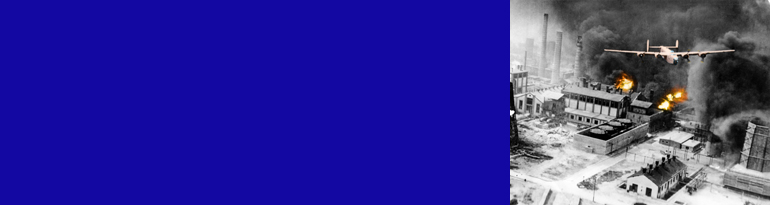
It’s been a really long time since I published an update on the progress of my TIDAL WAVE (TW)/Ploesti book & documentary project, which is probably in the running for longest gestation period of any book in history. My goal is to offer you an interesting and in-depth picture of the TIDAL WAVE attack, its context, and aftermath, told through engaging text and carefully selected photos and maps.
This note is quite long, but will bring you up to date on what I’ve already accomplished and still need to accomplish before what one deeply knowledgeable friend consistently calls my “Sistine Chapel” is done. LOL!
The good news is that I’ve made MASSIVE progress since my previous update. My research is nearly complete and I’ve begun writing some of the more technical portions of the book.
To remind: This will not be simply a “there I was at 20,000 feet, flat on my back, with Messerschmitts to the right of me and Messerschmitts to the left” re-hash of the war stories covered so well in the original and currently best TW book, Dugan & Stewart’s 1962 Ploesti, The Great Air-Ground Battle of 1 August 1943 (which is still in print 63 years later!).
It has certainly been the seminal work on the battle, and although I need to cover some of the same ground, I have access to considerable documentation not available to them (the Romanian archives were behind the Iron Curtain and most of the captured German archives were unavailable as they were being packed up to return to Germany), which changes important parts of the story.
In particular, I’ve spent a great deal of effort and a ton of money researching the Axis side of this event, which has never been told in English-language publications and barely touched in German and Romanian publications.
You’re aware from my previous notes that I’ve spent considerable effort on obtaining official documents from the Romanian archives and German Militärarchiv. Recently I’ve become aware of several crucial reports in the Bundesarchiv Politisches Archiv des Auswärtigen Amts (Political Archive of the Foreign Office). I’m working to obtain them now, and if they contain what I expect, could fundamentally change our knowledge and perspective on the German view of what happened during TIDAL WAVE.
I also have a lead to Alfred Speer’s 19 Aug 1943 report on the attack and its consequences to the Reich economic engine. If I’m able to actually find this report, it too could fundamentally change our understanding of how the Germans responsible for their war economy assessed the attack and its impacts.
I cannot write a superficial examination of the event and its context, as has been the case with every book and article published since Stewart and Dugan. You’ll discover both the broad sweep of relevant historical events and context, a minute-by-minute accounting of the actual attack, and the real outcomes of the bombing on the Americans, Germans, and Romanians.
After General Leon Johnson (who earned the Medal of Honor leading his 44th Bomb Group into the inferno of the Ploesti refineries) told me in 1985 “what really happened at Ploesti,” and “now you go prove it,” I eventually embarked on this journey to tell not only “what really happened” during the battle but also the context. A few of the issues I’ve deeply researched and will cover are:
CONTEXT
- Why was Romania, particularly Ploesti, important to the Axis (the truth, not the simplistic explanations previously offered)?
- Why was Ploesti attacked in the summer of 1943, and not later, once bases in Italy were available at about half the flying distance compared to launching from Benghazi?
- What impacts did the 12 June 1942 (1942) HALPRO attack have on the evolution of air defenses in Romania?
- How did the Germans and Romanians cooperate in the defense? Who contributed what? Who controlled what?
- What was the degree and nature of cooperation between the Germans and Romanians before the attack, and did it change after?
- What are the details of the actual defenses and how prepared were they to repulse a bombing attack?
- Who were the primary actors in this event, it’s leadup, and aftermath? What were their backgrounds? Were they prepared to fulfill their duties? How did they perform under extreme pressure?
- For a supposed “all American” activity, why were the British so deeply involved?
PREPARATION
- What, exactly, did the Germans know prior to the attack, and why was Romanian information lacking?
- What was the Axis Order of Battle and what were its strengths and weaknesses?
- Who was Generalmajor Alfred Gerstenberg (Befehlshaber der Deutschen Luftwaffe in Rumänien)? How was he qualified to command Luftwaffe forces in Romania? What was his connection to a famous fighter pilot of World War One (you’ll be amazed!)?
- What were the Allied objections to the mission, and who objected?
- What did the most senior air force leaders expect from this mission?
- Was there any truth to the claim Churchill offered RAF lead crews and Lancaster bombers to lead TIDAL WAVE? Was any testing done to see whether B-24s and Lancasters could fly in the same formation?
- Was 617 Squadron, RAF, (the Dam Busters) involved in this low level mission that occurred only 2-1/2 months after their famous low level attacks on the Ruhr dams (Operation CHASTISE)? How?
- What planning information was actually available to the TIDAL WAVE planners? What was useful? What was wrong or unhelpful? What crucial or important information was not available to them?
EXECUTION
- What and when, exactly, did the German early warning system report to fighter and Flak headquarters in Bucharest prior to the attack, and what did the Romanian observer corps report? In short, what current information was available to the defenses leading up to the actual attack?
- What did the Germans and Romanians tell themselves during the approach and actual attack?
- Why were the defenses confused about the attacking force?
- Why did the Flak forces perform so well and the fighers forces so poorly? What elements of the defenses worked well and what parts did not?
- What was the real role of electronic defenses (radar) before, during, and after the attack?
- Were Luftwaffe Helferinnen involved in the event? How?
- What was the status of the German and Romanian military leaders at the beginning of the attack? Where were they located and what, if anything, did they contribute to directing the defenses?
- What happened during the mission, minute-by-minute, on BOTH the American and Axis sides?
- What events that caused the US formation to be broken into two parts, two groups to make an early turn towards Bucharest, and failure of one bomb group to attack? Were these mistakes, or simply “fog of war?”
- What did Col Jack Wood, 389th Bomb Group commander, successfully do that Brig Gen Uzal Ent, leading the mission from the front aircraft, did or could not?
- Why were the 98th Bomb Group’s losses so much higher than any other attacking unit (nearly 50%), and why did the 93rd Bomb Group experience high losses (almost 40%)?
- Why did the 98th Bomb Group drop so few bombs on their assigned target (WHITE IV, Astra Romana)?
- Did just three B-24s from another unit exceed the 98th’s results at Astra Romana?
- How many bombers were shot down by fighters and how many by Flak?
- Who were the heroes and villains of this event, and why—and Dave, you’d better present damned good evidence!
AFTERMATH
- What role, if any, did Soviet prisoners of war play in the aftermath?
- What real and perceived impact did this attack have on the Romanian leadership?
- Did TIDAL WAVE’s results affect German high command thinking or behavior? If so, how? If not, why? Did they affect other components of the German war economy? How?
- Did TIDAL WAVE change the Axis plan for defending Ploesti? If so, how?
- What was the actual damage and effects on oil processing? Were deliveries to the German war machine affected?
- What was the effect on morale in the bomber encampments after the mission?
- Were any parts of the Army Air Forces’ official 1944 report (AAFHR-3) on the mission wrong, misleading, or actual cover-up?
- Who did General Johnson believe deserved the Medal of Honor, and whom did he believe did not deserve the award?
- Details on POWs. Did any POWs collaborate with their captors?
- Details on losses
- What lessons were (or could have been) learned from the attack (both attackers and defenders), and are any applicable to today’s military?
- And much, much more!
(If you have other questions not mentioned, be sure to contact me ASAP at support at Low-Level-Ploesti.org so I have time to do any additional research necessary to answer your concerns.)
The above are in addition to the specific details about how the mission was planned and executed, what happened to the crews and planes, details of air combats, the saga of the Hadley’s Harem crew that ended up ditching just off the Turkish coast*, etc.
* I have the complete archives the surviving crew of Hadley’s Harem assembled after the war, including tapes of their reminiscences, and the unpublished original manuscript about their experiences written by former crewman Roy Newton, in collaboration with the other Hadley crew survivors. Unfortunately all the Hadley crew members have now passed away.
And speaking of tapes, I have the post mission audio recordings of crewmen’s experiences made by Army Special Services soon after the mission. These were recorded on several wax phonograph records that amazingly survived in decent condition until today.
Since my previous note I’ve obtained almost 35,000 pages of documents from the Air Force Historical Research Center at Maxwell AFB, AL. Not all are relevant to TIDAL WAVE, but a surprising number of pages reveal previously unknown facts and insight directly or generally related to the mission.
Altogether I’ve translated around 9,000 pages of Romanian and about 7,000 pages of German documents related to TW. Most are contemporary official letters, memos, messages, and reports, while a few are books or articles relevant to the event or larger war situation. Needless to say, this has been a massively time-consuming but fascinating exercise.
I expect you’ll find interesting the Romanian civilian eyewitness accounts of the attack and its aftermath, which I discovered in Romania. Another is the Romanian passive defense commander’s report of the attack and its aftermath (very roughly equivalent to the old American Civil Defense organization).
These kinds of documents also revealed a great many heretofore-unknown facts and have given deeper meaning to things we thought we already understood. Here’s a great example of what original research in contemporary documents has revealed:
For several years I’ve had the official Romanian report of the first major meeting to assess the attack, it’s results, and necessary future improvements held in Bucharest on 3 August 1943 (48 hours after the attack). Present were General Antonescu, Romanian leader, General Gerstenberg, commander of the Luftwaffe in Romania, and principal staff and operational officers of the Romanian General Staff and Luftwaffe staff in Romania.
The report goes into considerable detail about what was currently known, partially from documents captured in downed American bombers; how the German and Romanian defenses performed, currently reported damage to the refineries and other government, commercial, and private structures in Ploesti and Campina; preliminary thoughts on what corrections and improvements needed to be made in the defenses, etc. Lots of detail.
A couple of weeks ago I got Generalmajor Gerstenberg’s report about the same meeting to General Jeschonnek (Luftwaffe commander). Wow. Comparing the two reports makes you wonder whether the two sides (German and Romanian) were on the same planet, or even in the same universe! I’ll go into a detailed comparison of the reports and their future impact on German-Romanian relations and defense activities.
(The letter to Jeschonnek reached him only 10 days before he committed suicide. It will remain forever unknown whether the report of this near-collapse of German-Romanian relations contributed to his suicide, and of course he was already under massive pressure, particularly from Göring, for Luftwaffe failures at Stalingrad, Mussolini’s deposal (at which time his aide had to take a pistol away from him to prevent him committing suicide on the spot), the Schweinfurt bombing mission the same day of his suicide (17 Aug 43) and the RAF’s bombing of Peenemünde that night…his aide found him dead of a self-inflicted gunshot the next morning. Speculation, of course, but the Gerstenberg report surely wasn’t good news.)
To wrap this up: I have only a few specific matters remaining to research, which could take several months. I’ve started writing some technical sections, which are unlikely to change in light of yet-to-be-discovered new information. I’m not going to speculate on when my manuscript will be ready for peer review or sending to the printer since too many variables can (and have!) cause more delay. I hope nothing impedes my sprint to the finish, but it could happen…
Dave
p.s.
I’m definitely interested in your suggestions and questions, and please get them to me right away. Address them to me directly at support at Low-Level-Ploesti.org.
Thanks Dave.
Absolutely cant wait.
Hi Clyde
Me neither!!!!! I’d like to close this out because I have other things I’d like to do with my life. On the other hand, to paraphrase Orson Wells’ ancient TV wine commercials, “I shall finish writing no books before their time.” (Boy, is that an obscure reference!)
Dave
Obscure reference indeed, but I am old enough to remember it
See my email.
Dave
Hi Dave,
Not that you haven’t got enough on your plate already, but you did ask!!😅
What about a paragraph or 2 concerning the prequel as it were, a quick overview of the airfields used and missions flown from the UK prior to the squadrons move to Bengazi.
Hi John
Good idea. In fact, there are several tie-ins between TIDAL WAVE and the 44th/93rd missions prior to moving to North Africa. Thanks for reminding me!
Dave
Hi Dave,so good to have news of this tremondous project
And like Clyde says can’t wait
And since you are asking
What happen in the previous meetings regarding speed and setting of the force Basically this unresolve issue cause a big problem in the deployment of the entire force
How was decided the order in witch each group was placed
Could you talk about the combat experience of each BG so to understand the behavior of the crews during the mission
Could you go over the B24D ball turret or not (none during the mission as far as I understand)
How come the “low” level went ahead when a lot of experience officers were against it
As you can see I have a lot of questions (suggestions ) and I could go with more but I will let other express theirs
Again can’t wait
Good luck
Hi Pierre
Thanks for contributing these pertinent and interesting questions for me to address in the book. I encourage you to send me more!
I know what I need and want to say, but I particularly want to make sure I address specific (or general) questions you guys have.
Dave
I am sure the time and effort you have put into this work will result in THE definitive work concerning Tidal Wave, much like the work of Tully and Parshall in telling the Japanese side of the Battle of Midway in their excellent book “Shattered Sword”.
You cited the Dugan & Stewart book which I agree was way more insightful than other material released after their book was published. So, I for one am eagerly anticipating your forthcoming work. Your attention to detail concerning this event is greatly appreciated
Hey Jonathan
Thanks for your kind comments. Whether my work rises to the level of Tully/Parshall or not will be up to others to decide. I’ll certainly do everything I’m capable of, so we’ll see.
Very productive day at NARA (National Archives) yesterday; found the Speer Ploesti report I’ve been searching for for quite a while, as well a a ton of other related material I previously did not know existed. Added several hundred more pages of German documentation to my collection. Still waiting for the Hitler/Antonescu discussion about the attack that’s coming from one of the Bundesarchiv collections in Berlin.
One completely unexpected avenue was suggested last week when I read a long report of personal and professional life in the US Army between the two world wars. I now have a much better appreciation of how those experiences shaped the senior AAF officers who planned and executed TIDAL WAVE. Just as important, I’m now motivated to do a bit more research on how Gerstenberg’s interwar experiences were so dramatically different from the AAF officers who attacked him. I think this dichotomy will make interesting reading. Ultimately, this will show how talent rises (at least in some cases) on both sides of the struggle. While I’ve got to do a bit more research on this subject, my preliminary expectation is the senior Germans involved performed at a very high level while not all the senior Americans did.
My research “to-do” list is getting shorter! (Thank God…)
Dave
Since the British were involved in the preparation, what was their post raid assessment(s) of how well the US executed the mission and achieved the mission objectives?
Hey Doug
ALL the immediate assessments of the attack came from British intelligence, which heavily influenced later assessments by both British and American organizations. I’ll cover this in great detail, particularly since some of the assessments were none too complimentary. Ultimately the measure that mattered was how well the results met pre-mission expectations of Allied senior officers. This is why my “attack” focus runs from 1 Aug 43 to 31 Jan 44–the six month window established by senior Allied leadership for assessing the attack.
Obviously I’ll cover a huge amount of material, particularly on the Axis side, going back to mid-1941 up through the actual attack, since this forms the context of the mission. I’ll also cover later 1944 activity and assessments insofar as they are relevant to TIDAL WAVE, which a surprising amount are.
I’ll also address the fact TIDAL WAVE was an anomaly insofar as British and American strategic bombing doctrine was concerned (although surprisingly close to prewar US strategic bombing theory), and how it affected senior leadership focus on TW as opposed to the 1944 oil campaign of high-level strategic bombing–which was conducted precisely according to existing strategic bombing doctrine. We’ll cover and compare the results of the two in some detail since these facts are essentially unknown–and very interesting.
Dave
Hey Dave – ran into you at NARA ten or fifteen years ago when you were researching this book. Really glad to see you’re still plugging away at it, but I may have you beat for longest-gestated book (WWII Essex class aircraft carriers). You certainly have many of us beat for dedication, however.
Hey Tracy
Ye gods…10-15 years ago! And for my project, that’s not that long ago! Thanks for your kind comments; my dedication comes from having accepted General Johnson’s 1985 charge to me, after he’d told me “what really happened at Ploesti,” to “now go prove it.” I accepted that charge without really understanding how much work it would be, although I didn’t really get serious about doing the research to prove or disprove what Gen Johnson had told me until about 15 years ago. Once I decided that retelling (with corrections) the same story Dugan and Stewart told so well in their 1961 book was not a useful endeavor, and that I needed to really get into the guts of context, planning, execution, and aftermath–and particularly nailing down the Axis side of the story, my path was set.
Dave
Dave, Thanks for your update. With the anniversary of VE Day and soon VJ Day a work such as you’re putting together is so needed to put to print the story of Gen. Johnson’s truth about Tidal Wave. I always held Col. Kane in high regard but his contemporaries certainly did not. But Gen. Johnson in my opinion comes out on top as far as Tidal Wave commanders. I hope that you go into some detail on the strengths and weaknesses of each of the BG commanders and how those personalities affected the mission. I look forward to this “Magnum Opus” regarding Tidal Wave. I’ve waited since 1964 to know the “real truth” about Ploesti. Best wishes.
Kindest regards,
William Reece
Hi William
Thanks for your kind comments. Yes, I’ll spend considerable time documenting the senior leaders on both sides. Recall that every surviving TW bomb group commander ended up as a general (Johnson-4 stars; Compton-3 stars; Wood-2 stars; Ted Timberlake (201st Combat Wing commander, who was not allowed to go on the mission)-3 stars) EXCEPT Kane, who retired as an embittered colonel more than 10 years after first being promoted to colonel. He never held a meaningful command position after the 98th Bomb Group, which shows how the Air Force hierarchy assessed his skills and potential for higher office. It wasn’t just his contemporaries who held him in low (or very low) regard; so did his bosses over the next decade. However, with his Medal of Honor (earned or unearned…I’ll discuss this in detail too), it wasn’t feasible for the Air Force to simply get rid of him. He was right at 20 years in uniform when he retired in 1953, so in effect he retired on a “normal” schedule. The generals retired at 30 or more years service.
I’ve been deeply researching Generalmajor Alfred Gerstenberg, commander of the Luftwaffe in Romania, and have just established communications with one of his stepsons. I’ve gotten considerable information from the Bundesarchiv in Germany, and hope to get additional “personal” details from his family.
Although I know who they were, I’ve been able to find much less information on the official Flakfü and Jafü, neither of whom was actually present for the attack (nor was Gerstenberg), but keep searching. One thing I am still working on is how involved Major Douglas Pitcairn of Perthshire (yes, a German fighter pilot with a Scottish name) was in the battle. Dugan & Stewart interviewed him for their 1962 book and in it he comes across as the major fighter commander present on scene, fulfilling the duties of Jafü, during the attack. This is possible–he was present at the time–but I’m still working to nail down how involved he actually was. Note I’m NOT saying he wasn’t in charge of the fighter force during the attack, it’s just that I haven’t yet documented this to my satisfaction.
Dave
have you seen on you tube interview of Norbert N Geb Gebhard
Out 3 days ago
Hey Pierre
I do now!!! https://www.youtube.com/watch?v=6Nh_spPEE3k
Thanks for letting me know. BTW, if anybody has the TIDAL WAVE roster taken from the Stewart & Dugan 1961 book, his name is misspelled “Gerhard” and not the correct “Gebhard.”
Too bad this was a 1997 interview; I would love to have interviewed him myself.
Geb was copilot on the Braly crew that flew B-24D-95-CO 42-40749/P, Sack-Time Sally. Plenty of pics of this ship on the web.
Dave
Thanks for the updates! Looking forward to seeing the pictures, hearing the audio recordings and added information from all the work you’ve done.
As previously stated, my great uncle Arnold Holen (spelled incorrectly “Holden” in the Dugan and Stewart book) died in that operation. Was the top gunner according to the information I’ve seen on Lt Roy Harms’ B-24. Only Jack Reed, the tail gunner survived and became a POW.
Hey Tom
Thanks for your kind comments. Did you get the Sortie Report and MACR for the Harms crew I emailed you last year?
Dave