Which TIDAL WAVE bomb group commander was diagnosed with severe battle fatigue (PTSD) BEFORE and DURING the TW mission? I have the medical documentation.
Give me your best guess (with logic) in the comments below!
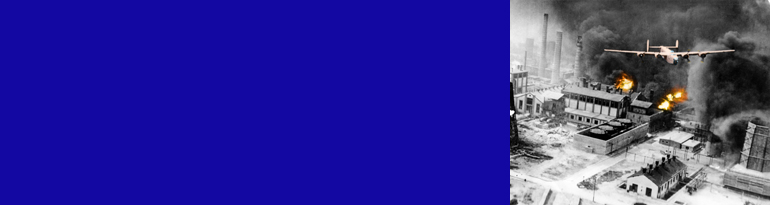
Which TIDAL WAVE bomb group commander was diagnosed with severe battle fatigue (PTSD) BEFORE and DURING the TW mission? I have the medical documentation.
Give me your best guess (with logic) in the comments below!
I say it was Col. Keith K. Compton, co-author along with Brig. Gen. Uzal Ent of the infamous wrong turn of the 376th Bomb Group.
Hi John
Thanks for your guess! Will reveal all in my book (of course!).
Dave
Really looking forward to your book, and all the extra details you have been collecting! My grandfather was the A/C in Patches in TW (he’s on your list). Also, as a former AF officer/aviator, just interested from a historical perspective,as the AF history office sent me some info years ago think from the Dugan & Stewart book. Keep up the great work.
Hi Pat
Thanks for your kind comments. At the moment I’m concentrating on the backgrounds of the primary actors in the TW saga (Gerstenberg–an amazing man; Ent–another amazing man (seriously, although I will have some pretty rough things to illuminate about him), albeit with an unfortunate aversion to physical danger; Ted Timberlake & Jake Smart, the primary strategic and tactical planners, and the five bomb group commanders (Johnson, Baker, Kane, Wood, and Compton). This includes my study of “loyalty” among officers commissioned during the interwar period.
The concept of loyalty truly came into play in the aftermath of TIDAL WAVE. I was commissioned right after the US abandoned South Vietnam, so the military I “grew up in” had a vary shaky concept of loyalty. IMO, and I’m working to prove this, the concept of loyalty to one’s fellow officers (as opposed to Country, unit, etc.) began to erode in the late WW II time frame, and accelerated through the 1950s to reach a true nadir during the Vietnam period. I’ve been retired from the Air Force for a very long time, but it appears to me the concept of loyalty in the current force is roughly the same as during Vietnam.
The foregoing is obviously painting with a very broad brush, and individual officers and even units retained something like the pre WW II sense of loyalty among Army (Air Corps, but also the US Army at large) officers. Also obviously, loyalty among enlisted members is an important subject, but one with a somewhat different orientation.
In sum, it’s pretty clear Americans of today, including current and former military members, have little appreciation of the concept of loyalty as demonstrated among the prewar US Army officer corps. Because this concept is central to understanding the TW story, I have a huge challenge clearly communicating the issue so readers will understand the aftermath of the mission in its true light.
Dave
Former AF Officer myself, it’s interesting observation about loyalty. I got out back in the mid-2000’s, commissioned in the late 90’s, so I do not know what it is like now. We had a sense of it in my career field, maybe as we were a larger air crew than you see elsewhere, but we all had mission crew commanders or Squadron CCs that folks respected and would follow anywhere. May have just been a lucky period. It is interesting to see the changes in the various periods of USAF/AAF history.
Hi Pat
Among other things, it seems “loyalty” is a function of competent leadership at the crew and unit level. It sounds like things were better in your career field than in the several fields I was in (“couldn’t hold a job”–literally every assignment was completely different from my previous work, which made professional life extremely interesting and mostly fun). But again, my career was in the 20+ years immediately after Vietnam and I missed the first Gulf War because I was working for the SecAF.
My current study is what caused the apparently near-ironclad loyalty among USAAF (Air Corps) officers to each other from the later interwar period through mid-WW II at least. Again, people are people and loyalty varied to one degree or another according to many factors, but I’m studying the broad sweep of beliefs and behavior in the Army officer corps during that period.
I think I’m starting to get a handle on the subject, and am somewhat surprised that although fellow-officer loyalty appears to have been strongest among USMA grads, men commissioned through other channels (essentially aviation cadets) and active reservists during that period seem largely to have accepted the same mores as the ring-knockers–provided they remained on active duty for what amounted to a full active duty career.
Don’t want to get off on a tangent here, but it’s fascinating that one of the TIDAL WAVE bomb group commanders was commissioned as a reserve officer but spent nearly all his time between 1932 and 1943 on active service. He applied for a regular commission every single year but was turned down every time until 1944 (post TW). The story behind his situation is both interesting and instructive.
Research continues!
Dave
Happy New Year! Is this the year we get your monumental work?
My guess about the PTSD stricken Commander would be either Kane or Compton given their subsequent actions over Ploesti. Kane most likely.
Kind regards,
William Reece
PS Have you seen the new Airfix B-24D kit? It is fantastic, save for a couple small items.
Hi William
Sure hope I can finish up this effort during 2026. Ye gods, I’ve done a lot of work and unfortunately for me still have some important issues to finish researching. These last items are actually quite interesting, so I don’t intend to simply ignore them and move on.
Thanks for you guess about the group commander with PTSD. I’ll reveal the truth in my book (obviously!), so stand by.
I have the new Airfix B-24D kit. Beautifully designed and manufactured, but I have a few reservations about some of the details. May get into them at some future point, but far too busy now.
Dave